Napp
We designed a VR experience and app that helps people recover from fatigue before it becomes burnout, with short, structured naps that restore focus, energy and clarity during the working day.
Read full story

The cost of a fatigued workforce
Napp was inspired by one of the biggest problems in modern work culture, in which exhaustion is often worn like a badge of honour. Cutting sleep, working late and pushing through fatigue are treated as signs of ambition.
But the need for rest is not the opposite of productivity. As tiredness builds, attention becomes harder to sustain, decision-making becomes less reliable and the nervous system is placed under greater strain. People may still be at their desks, but they are not necessarily performing at their best.
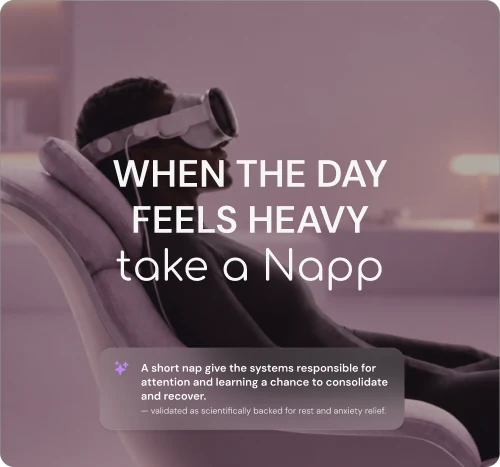
Our research alongside scientists showed that short daytime naps can improve alertness, memory and cognitive performance. Yet most workplaces still leave people with only two options: keep pushing or stop completely. What is missing is a practical, credible and accessible way to recover without stepping away from the working day.
Everything had to be scientifically grounded
From the experience itself to its technology and market positioning, every decision was shaped by research, testing and real-world feedback. This allowed us to position Napp not as another wellness tool, but as a performance-driven recovery solution.
Research and validation
Focused on understanding the science of daytime rest and identifying how it could be translated into a workplace experience. Working with two universities, we began testing the concept in controlled environments, gathering evidence around usability, perceived recovery and the effectiveness of the experience. This research helped us secure grant funding with WMHTIA, supporting our next stage of development and iteration.
VR Experience
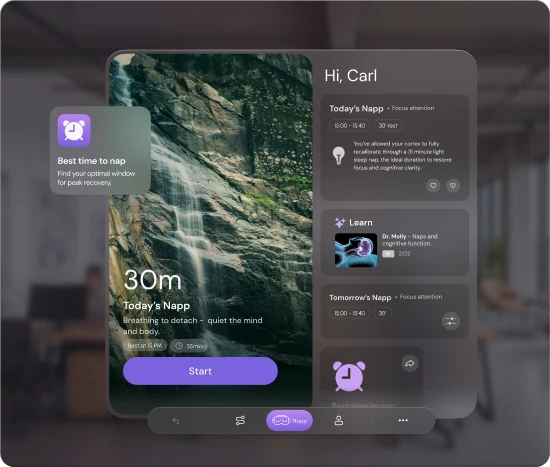
We translated the research into an MVP: a simple, linear VR recovery experience. Voice guidance, breathing, sound, darkness and gradual light transitions were all designed to reduce cognitive load and support a calm, predictable rhythm. The challenge was to use a technology associated with stimulation to achieve the opposite: a controlled, low-arousal environment guiding users through wind-down, rest and wake-up.
The market fit
Napp was first conceived for high-pressure, safety-critical roles with irregular shift patterns, including pilots, NHS workers and military personnel. While the need was clear, adoption came with complex operational and procurement barriers. We found a more immediate opportunity in the modern workplace, giving Napp a clearer proposition and a wider market: accessible recovery for workplace fatigue.
Physiological recovery, built into the workday
Modern workplaces invest in gyms, therapy, meditation apps and ergonomic furniture. But when an employee hits a wall at 2pm, there is rarely anything in the workplace designed to help them recover.
We built Napp to fill that gap: physiological recovery, built into the working day. For employees, it offers a structured, stigma-free way to reset during work hours. For employers, it provides a measurable recovery system with the data to prove it works.
A design to ease the mind
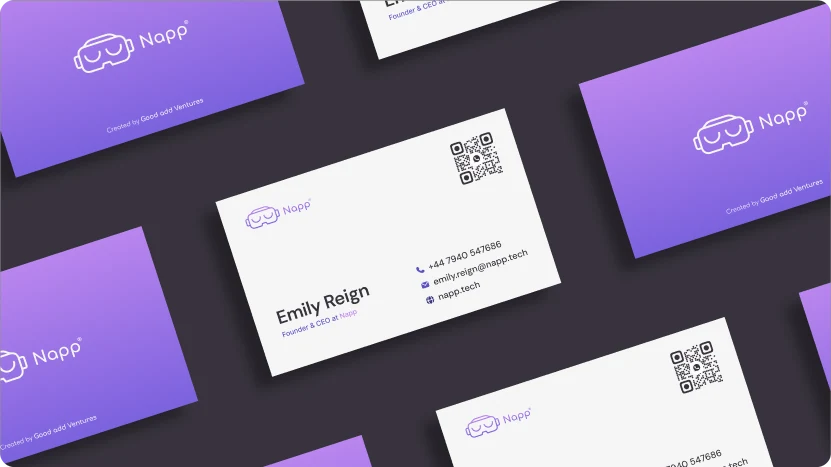
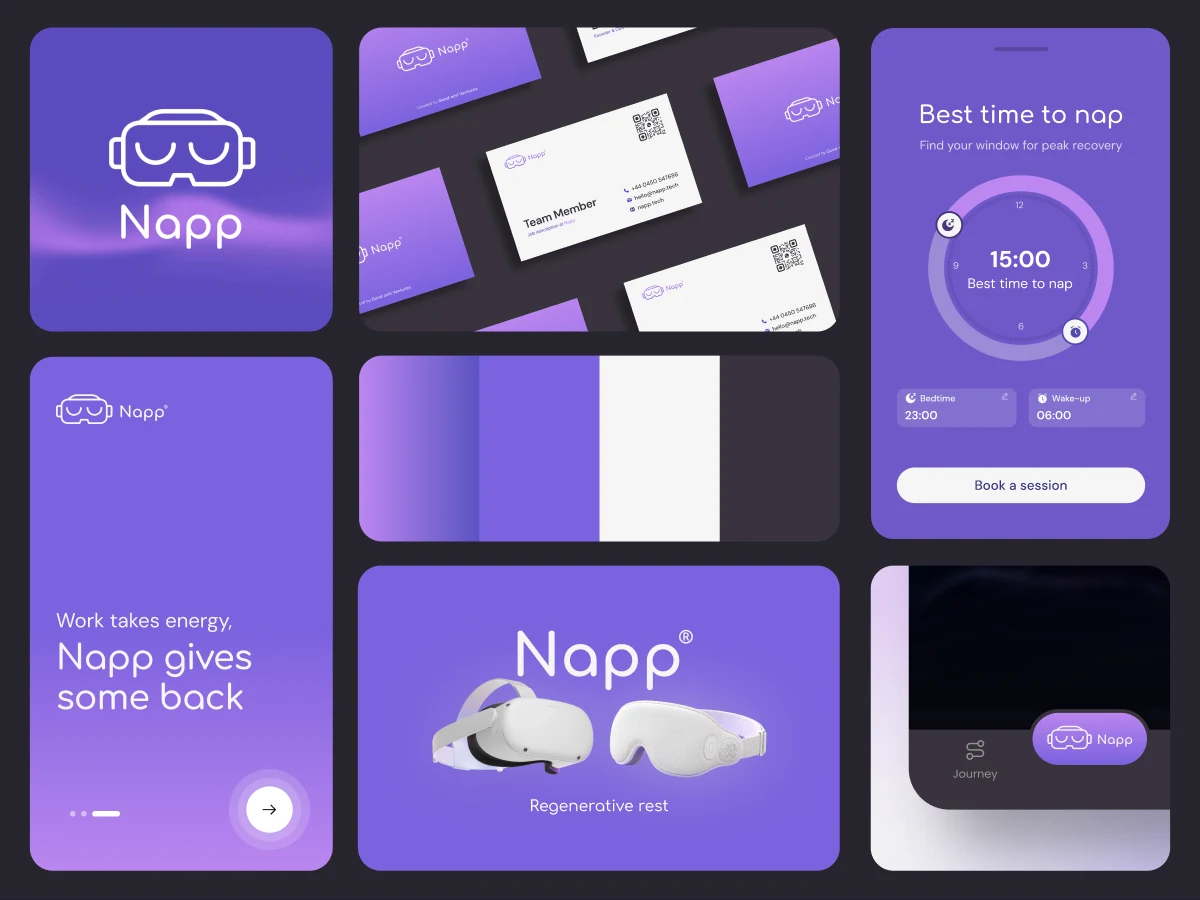
We built Napp's brand around a simple principle: if something demands unnecessary cognitive effort, it does not belong here. The identity needed to feel calm without becoming clinical, sophisticated without feeling exclusive, and human while retaining the credibility required for workplace adoption.
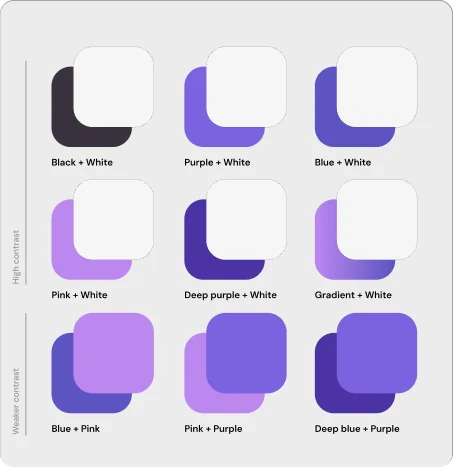
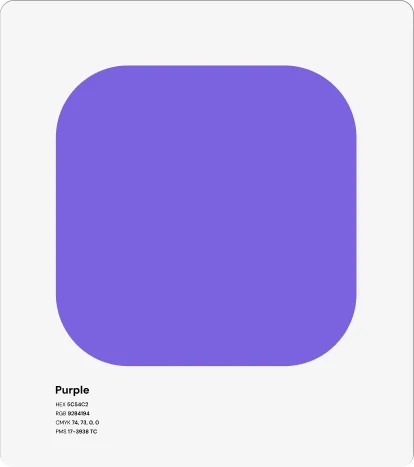
Every element was designed to reduce friction and create a sense of safety, ease and recovery. Soft gradients, curved shapes and flowing forms helped minimise cognitive demand. Colour plays a central role: Napp's soft purple evokes tranquillity and reassurance, supported by muted, harmonious pastels. Together, these choices turn rest into a sensory experience.
A complete workplace recovery programme
We designed the digital and physical experience as one connected system, helping organisations introduce restorative rest without disrupting existing workflows or office environments.
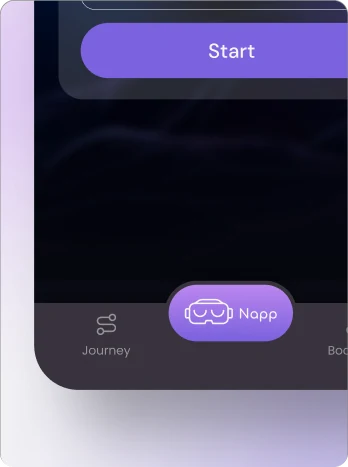
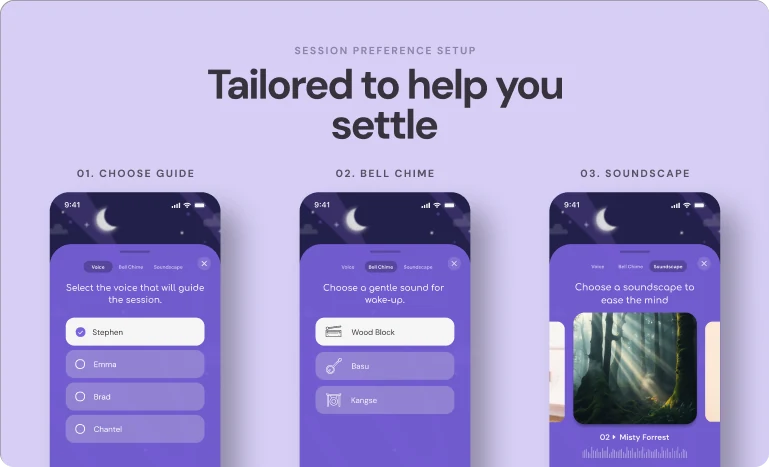
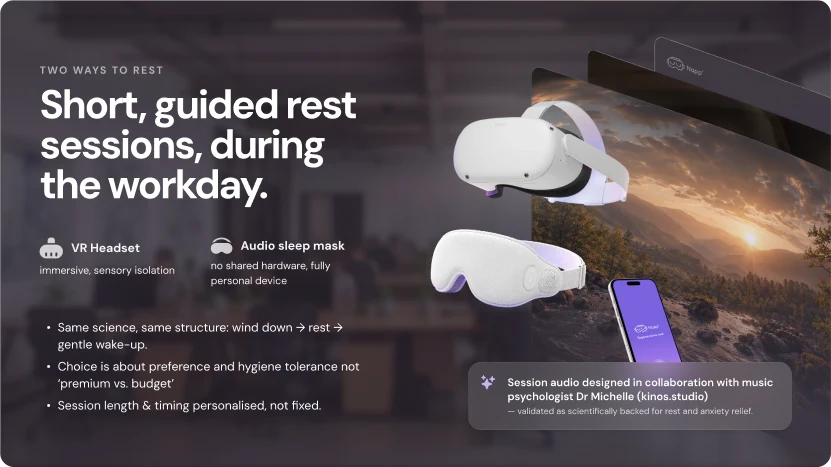
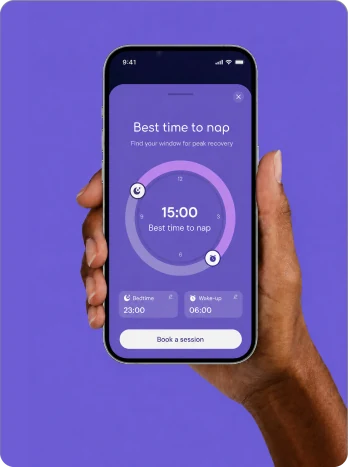
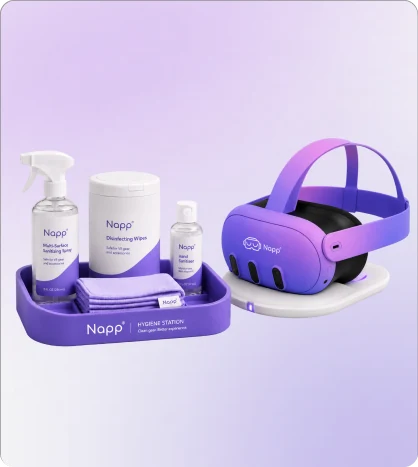
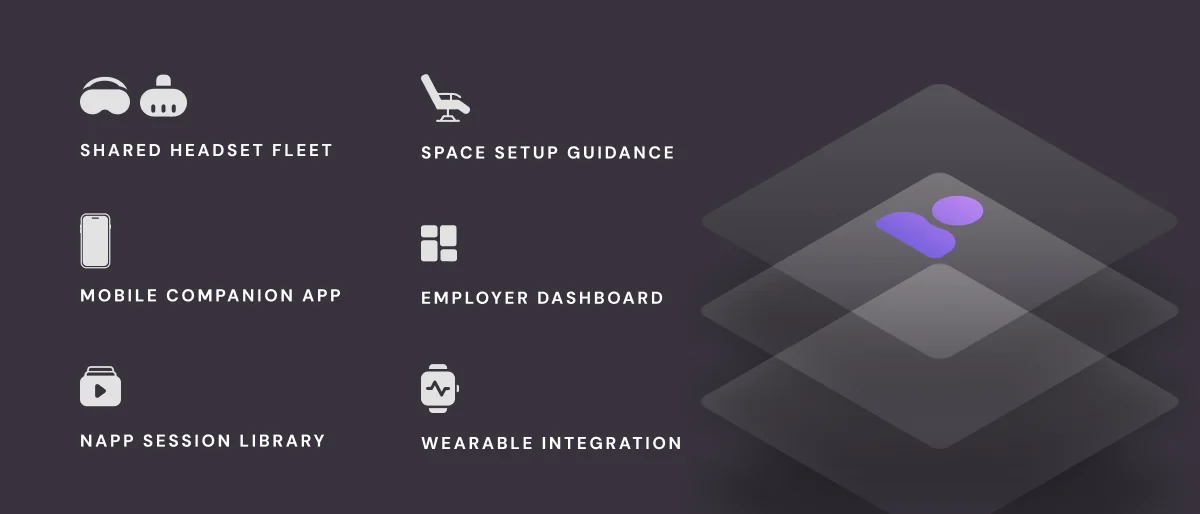
We brought every part of Napp for Work into a single enterprise programme. Shared VR headsets and guided sessions support the employee experience, while the companion app manages bookings and personal data. We also designed the workplace implementation, onboarding programme and employer dashboard, giving organisations the tools to launch Napp, track engagement and understand its impact.
Choosing the right technology
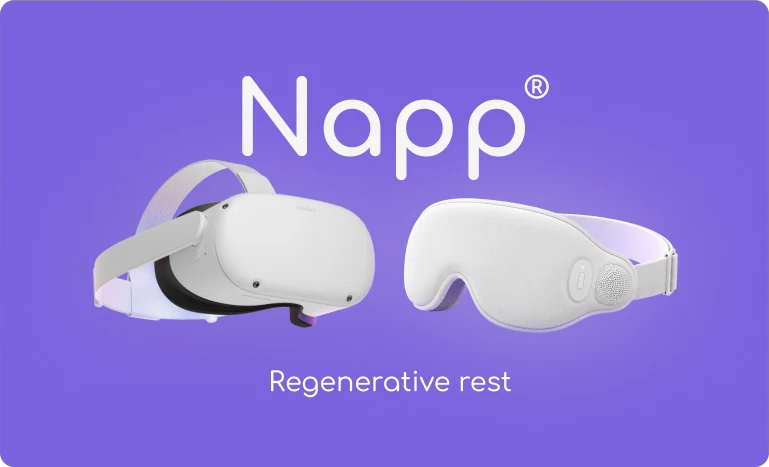
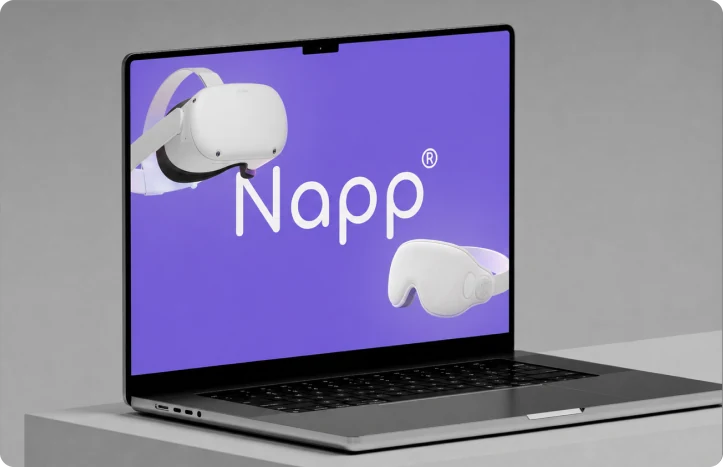
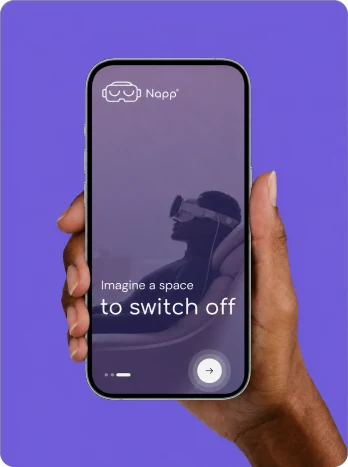
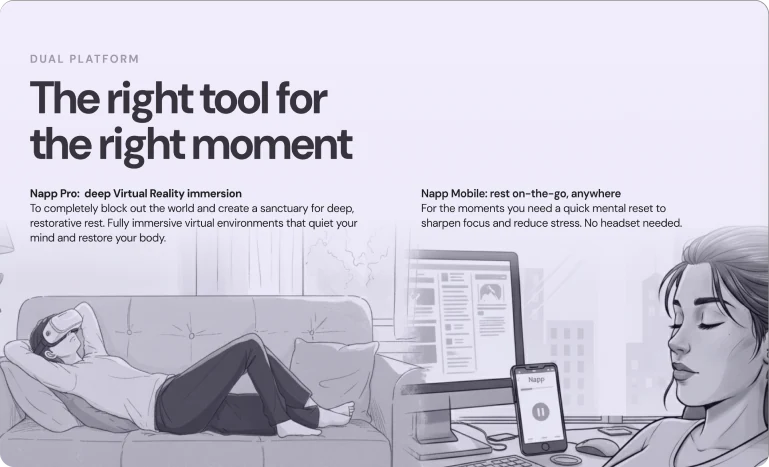
We used immersive technology to do the opposite of what it is usually designed for. Rather than adding stimulation, Napp gradually reduces sensory input, helping users disconnect from work, settle into restorative rest and return gently.
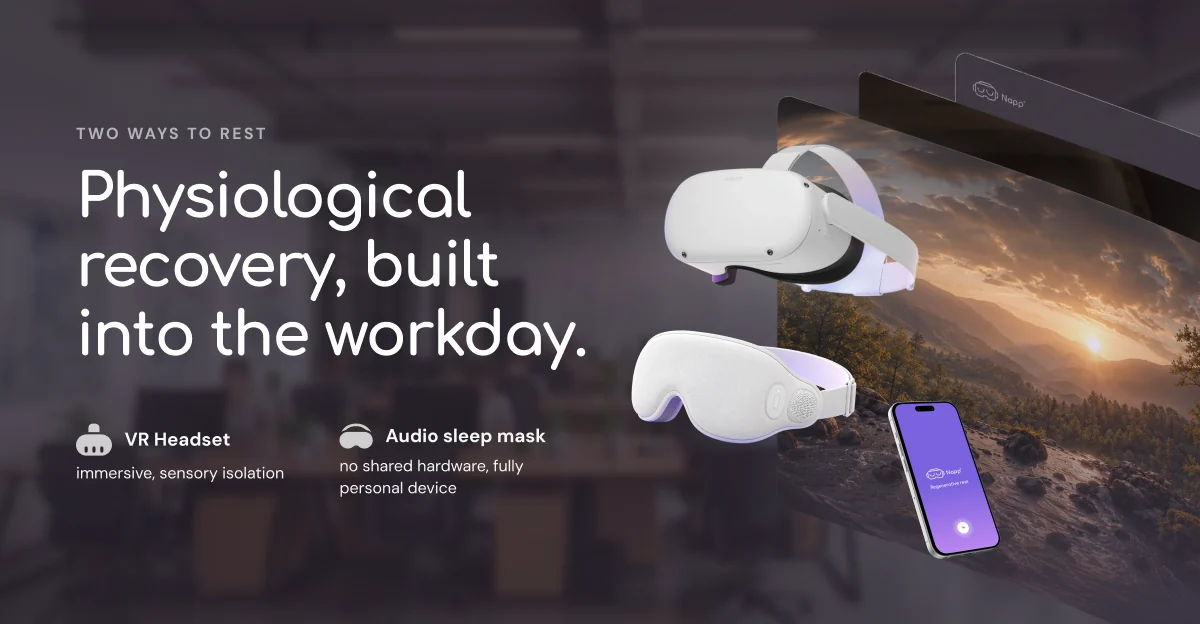
For where VR is not the right fit, we also designed a smart sleep mask experience, giving organisations a more flexible way to introduce recovery across different users and workplace settings.
We chose VR first because it offered four key advantages that other devices could not replicate:
Sensory Isolation
The headset reduces light, movement, noise, and the awareness of colleagues, even in high-stimulus environments.
Multisensory Immersion
Calming soundscapes and visuals help lower cognitive load and cortical arousal.
Psychological Permission
Signals that the employee is using a recovery tool, not simply “sleeping at work”.
Controlled Recovery
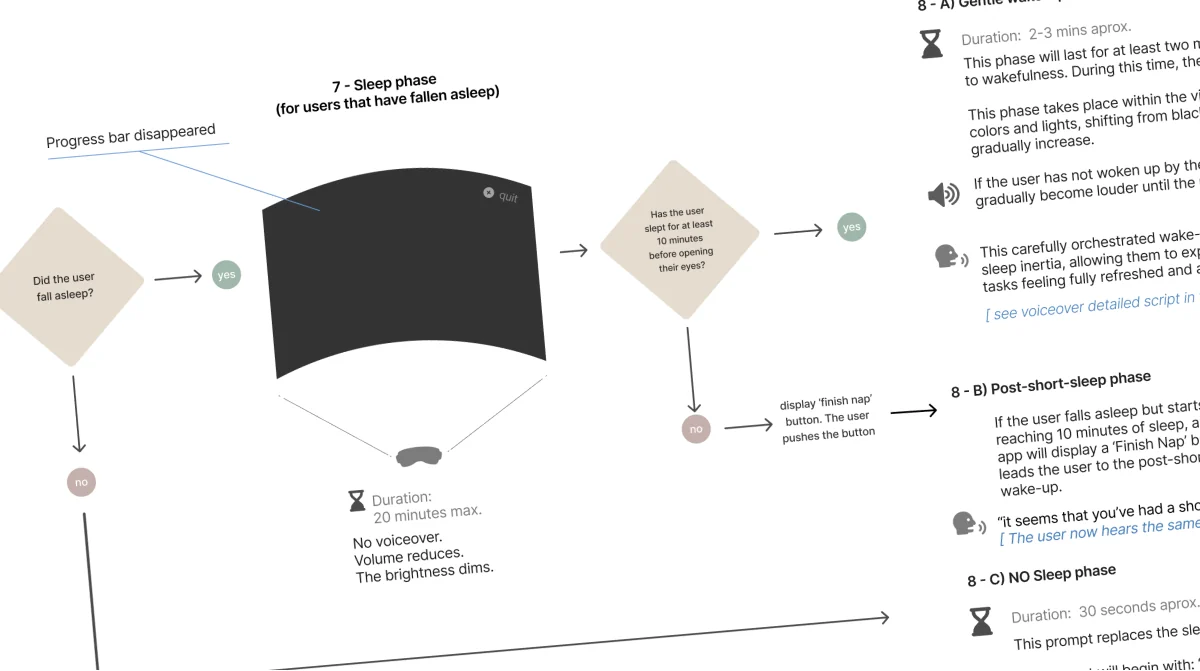
VR guides users through wind-down, rest and wakefulness, using sensors to detect sleep and time wake-up precisely.
The VR experience
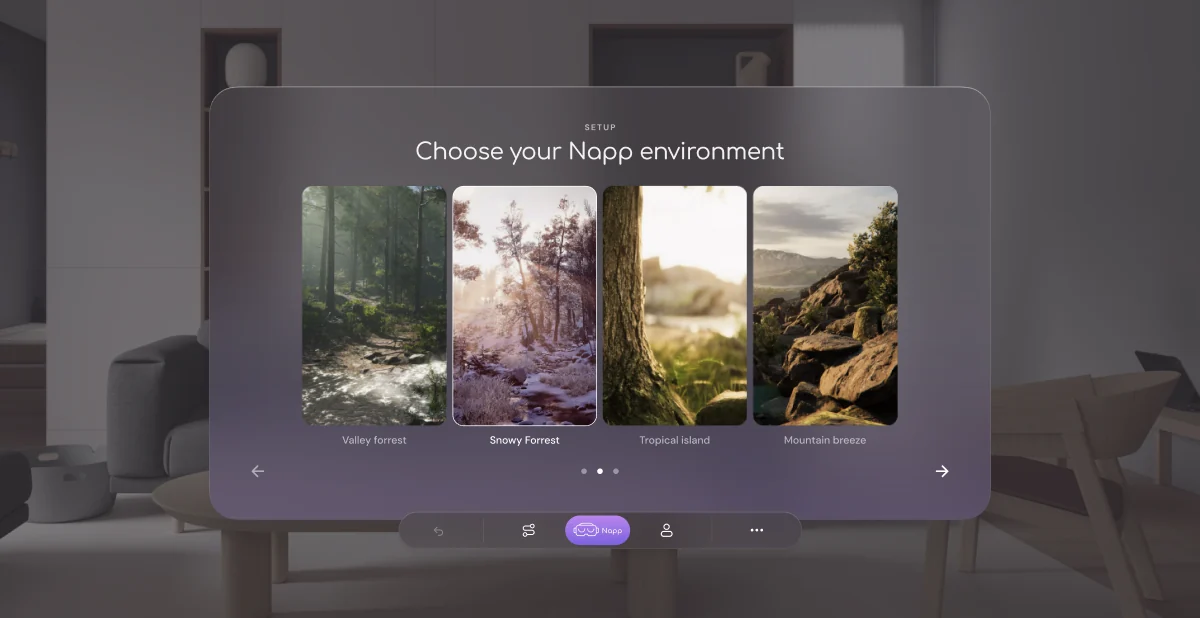
The journey guides users through three stages: winding down through guided meditation, entering an immersive rest session, and waking up gradually. By removing unnecessary choices and focusing on a single flow, the product helps users transition smoothly from stress to recovery and back to productivity.
Building the Data Layer
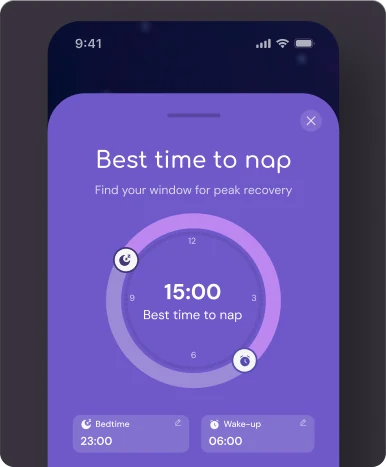
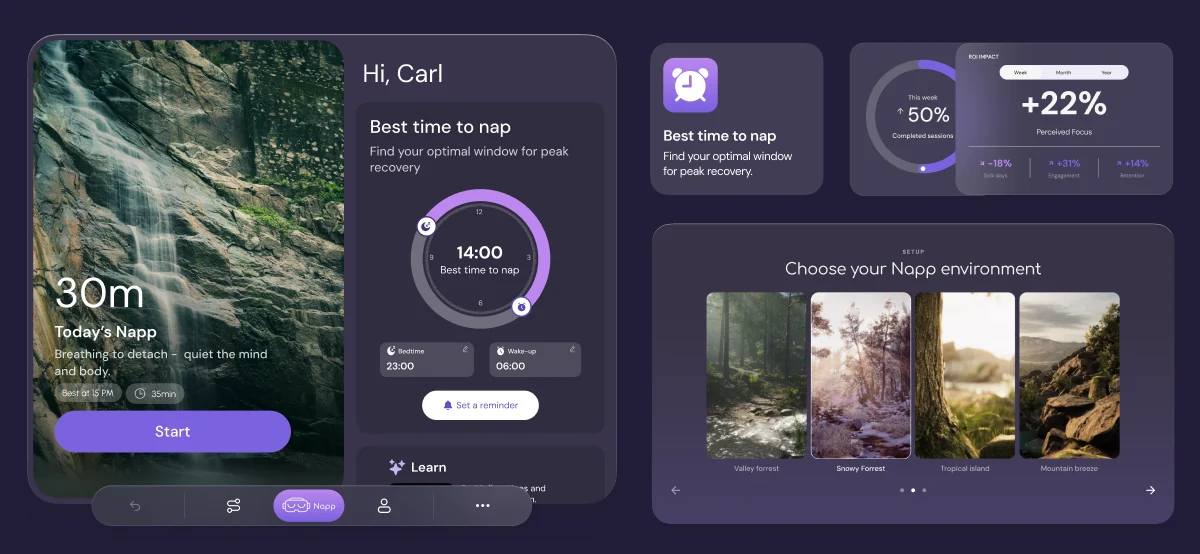
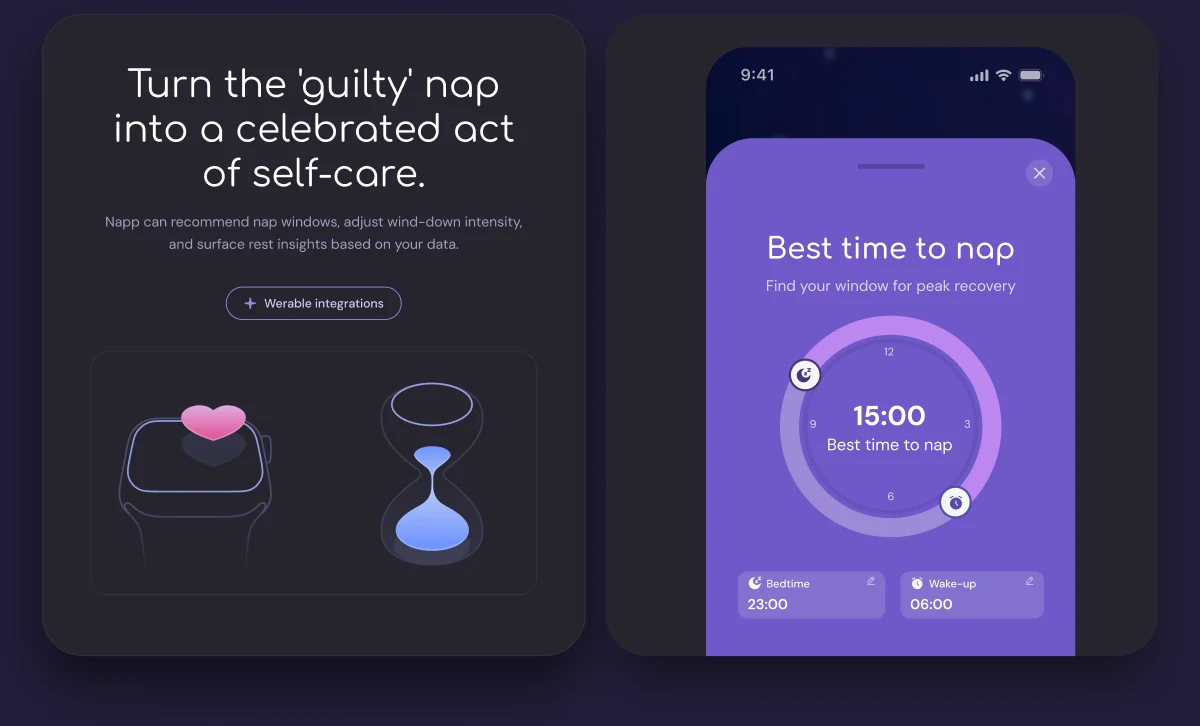
We designed the platform around a simple idea: the more it understands about human behaviour, the better it can support recovery. By combining check-ins, schedule inputs, session history and optional wearable data, it can recommend suitable recovery windows without disrupting the working day, adapt the intensity of each wind-down to the user's needs and surface more meaningful insights over time.
Headset sensors can also detect changes in rest state, helping the experience adapt and time the wake-up more precisely. We also identified wearable integration as a scalable way to deepen personalisation and build a clearer picture of individual recovery patterns.
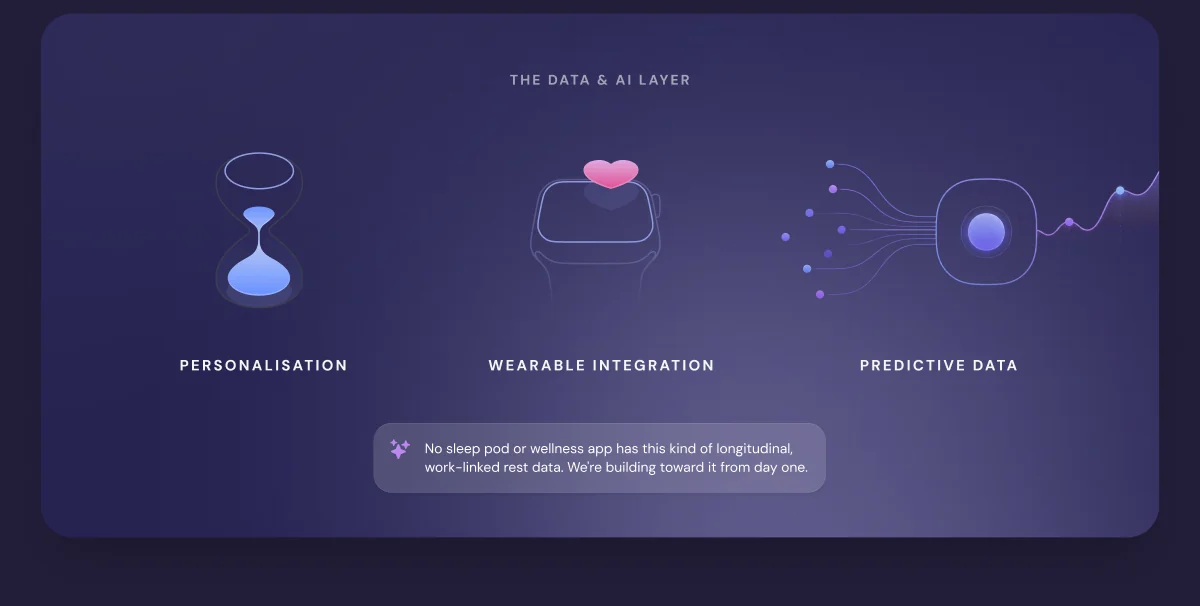
No sleep pod or wellness app has this kind of longitudinal, work-linked rest data. We're building toward it from day one.
Measuring what devices cannot
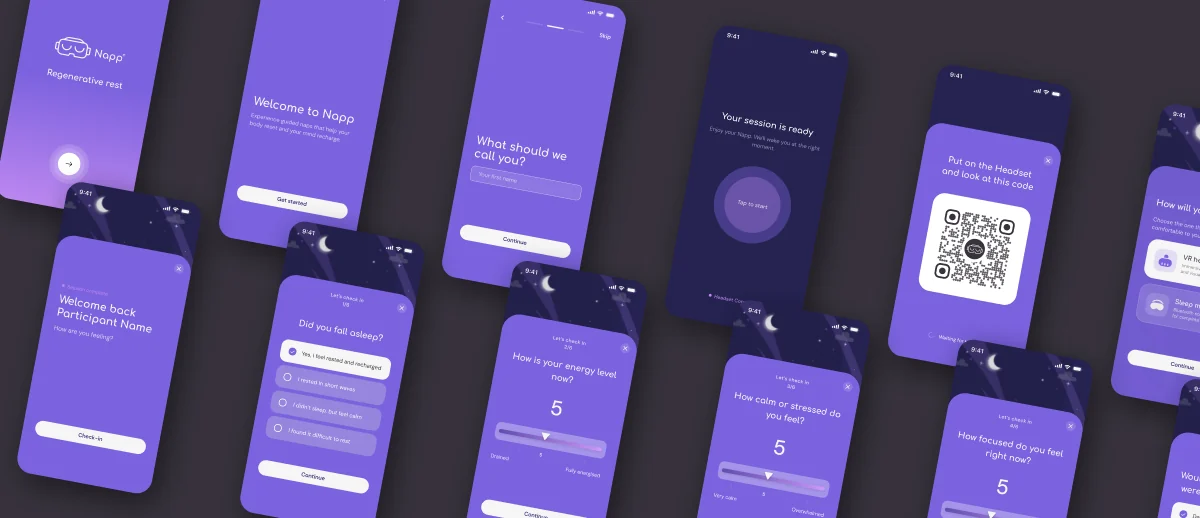
To capture changes in mood, clarity and energy, we introduced short check-ins before and after each session. These simple interactions reveal subtle shifts in how people feel and function — insights that sensors alone couldn't pick up.
Making the business case
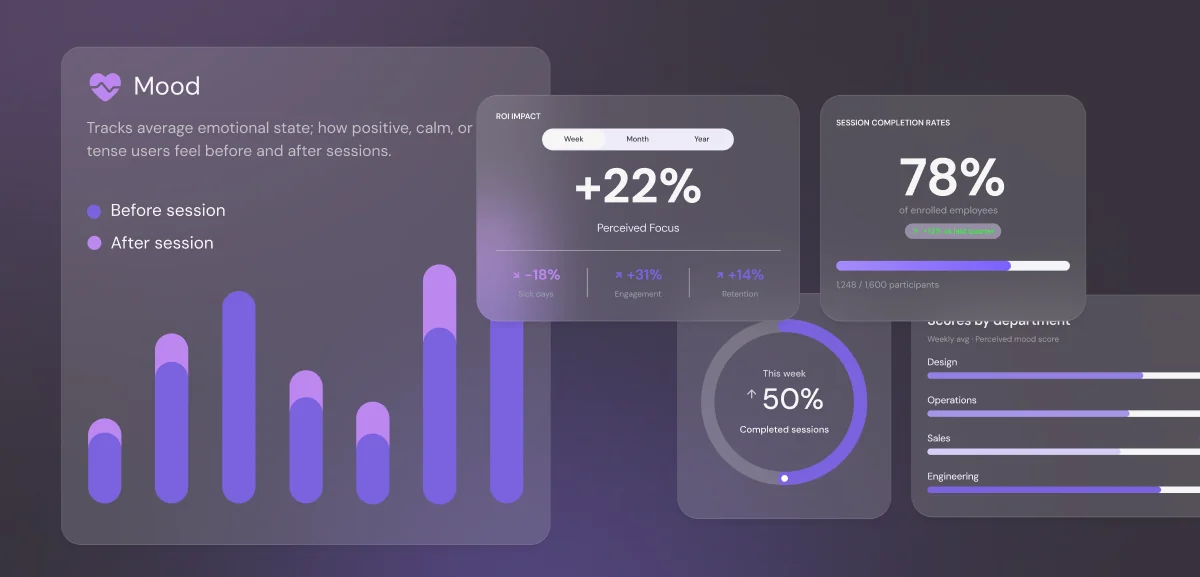
For organisations to invest in recovery, we needed to make its value visible. In response, we developed an employer dashboard that brings together engagement data, pre- and post-session check-ins, usage patterns and recovery trends.
This gave employers a clearer view of adoption, shifts in energy, stress and focus, and potential links with absence and sick leave over time. To protect individual privacy, all employee insights are presented as aggregated data rather than personal records.
Grounded in neuroscience
We partnered with two universities to ground the product in both scientific research and real-world testing. Sleep research was developed in collaboration with Loughborough University's Sleep Science Department, while ongoing experiential testing is being conducted with Staffordshire University's Serious Games Institute.
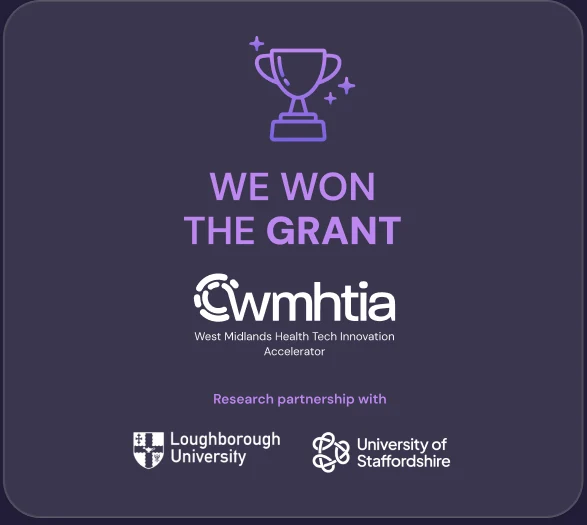
This evidence-led foundation helped us challenge assumptions, refine the experience over time and successfully secure grant funding from WMHTIA — the West Midlands Health Tech Innovation Accelerator — to support its continued development.
Onboarding early testers
To build early traction and test the proposition in a real workplace context, we created a dedicated landing page to onboard business testers and make participation simple.
At the same time, we refined the MVP for the workplace, adapting the experience and data collection to generate insights businesses could use to demonstrate ROI and build a more compelling case for adoption. This made defining the data architecture behind the employer dashboard a crucial next step.
What comes next
Currently in Private Beta, Napp is undergoing early validation with selected users and organisations. Insights gathered during this phase will inform the next stage of development as the product moves towards broader adoption and continued expansion of its personalised rest experience.
In private alpha. Building the evidence.
-
Pilot MVP (Q1)
- VR session library
- Mobile booking and QR login
- Pre/post check-ins
- Basic personal insights
- Shared headset deployment
- Aggregated employer dashboard
-
V1 Enterprise (Q2)
- Journey progression
- Advanced onboarding
- Improved workplace reporting
- Session recommendations
- Content updates
- Account support
-
Future defensibility (Q3)
- Wearable integrations
- Advanced sleep/rest detection
- Adaptive AI voice
- Health platform integrations
- Personalised recovery windows
- Research-backed outcome modelling
Ready to accelerate?
Tell us about your startup, the challenge you're facing and the milestone you're working towards.
Start the conversation →